Session 26: Machine Learning in Supply Chain Planning - Part II
Last July, we introduced the topic of AI Applications making a big impact within supply chain planning functions. This
trend has continued to grow and reinvent the way companies are driving both efficiency and effectiveness across
operations.
Companies are now able to make smarter decisions faster than ever before using algorithms to unlock insights and support decision products.
Businesses are taking operations to the next level through the use of AI for volatility and risk detection, root cause analysis, advanced inventory optimization, and so much more. Review this session to learn more about how your company can apply the latest technology and techniques to vastly improve the way you run your own daily operations.
Companies are now able to make smarter decisions faster than ever before using algorithms to unlock insights and support decision products.
Businesses are taking operations to the next level through the use of AI for volatility and risk detection, root cause analysis, advanced inventory optimization, and so much more. Review this session to learn more about how your company can apply the latest technology and techniques to vastly improve the way you run your own daily operations.
Kristen Daihes
Partner, Opex Analytics Feb 2019
 Watch
Watch PDF
PDF
Session 25: Understanding Automation - What to Use Where?
How does AI help with Automation? Does Automation always involve robots? What is RPA (Robotic Process Automation)?
How does any of this solve the problems my business faces on a daily basis?
These are all common questions in a world where new articles about robots taking over a company's operational tasks surface daily (if not hourly). The truth is, the term Automation (like AI and RPA) covers a broad set of applications. Many of them don't involve robots at all.
Review this session where we dive into the many forms of automation being implemented at companies just like yours. We will define the many classes of automation, where they provide value, level of difficulty in implementation and how they fit into an enterprise's broader AI journey. From RPA, to making predictions, to making decisions we will reveal the truth behind their technical requirements as well as provide examples of where they work best.
These are all common questions in a world where new articles about robots taking over a company's operational tasks surface daily (if not hourly). The truth is, the term Automation (like AI and RPA) covers a broad set of applications. Many of them don't involve robots at all.
Review this session where we dive into the many forms of automation being implemented at companies just like yours. We will define the many classes of automation, where they provide value, level of difficulty in implementation and how they fit into an enterprise's broader AI journey. From RPA, to making predictions, to making decisions we will reveal the truth behind their technical requirements as well as provide examples of where they work best.
Mike Watson & Andy Fox
Partner & Principal, Opex Analytics Jan 2019
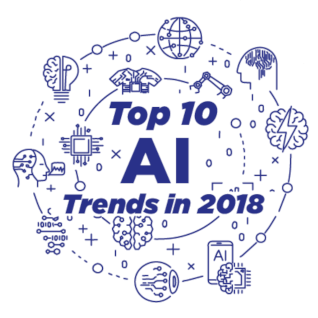
Session 24: Top 10 AI Trends in 2018
The Artificial Intelligence Movement rolled on in 2018. The market witnessed both the evolution of more mature
technology as well as the release of many new applications that will continue to gain traction in the years to come.
So what should you be sure to take away from 2018? What should you expect in 2019? In this session, we are going to give you our top 10 practical insights from AI advancements in the past year and what to be ready for in 2019. From the increased use of AI in the cloud, to the implementation of 'smart automation' and the growing application of deep learning techniques that will continue to make major waves in 2019.
There is no way around it, executives are now being pressured to deliver not only an AI Strategy but an AI Execution Strategy. Review with us as we discuss these trends in a way that allows you to further define and plan your own execution strategy for 2019 and beyond.
So what should you be sure to take away from 2018? What should you expect in 2019? In this session, we are going to give you our top 10 practical insights from AI advancements in the past year and what to be ready for in 2019. From the increased use of AI in the cloud, to the implementation of 'smart automation' and the growing application of deep learning techniques that will continue to make major waves in 2019.
There is no way around it, executives are now being pressured to deliver not only an AI Strategy but an AI Execution Strategy. Review with us as we discuss these trends in a way that allows you to further define and plan your own execution strategy for 2019 and beyond.
Mike Watson
Partner, Opex Analytics
Dec 2018

Session 23: The Magic of Turning Algorithms Into Applications
What good are powerful algorithms if your business has no way to apply them? What does it mean to 'productize' your
solutions? What options do you have when attempting this? What value does this create?
The bottom line is that algorithms create value only when they are made useful to the business. The business community now understands the value of custom algorithms to create a competitive advantage. But they also fear it because of the difficulty associated with deploying these algorithms as practical and sustainable business applications.
In this academy session, we will walk you through our own best practices for converting algorithms into applications. We will showcase our platform, but also walk you through other common approaches - both commercial and open sourced. What works best for you will depend on where you are in your own AI journey.
Don't miss this opportunity to learn more about and see examples of business value being created on the front lines through best in class deployment of AI.
The bottom line is that algorithms create value only when they are made useful to the business. The business community now understands the value of custom algorithms to create a competitive advantage. But they also fear it because of the difficulty associated with deploying these algorithms as practical and sustainable business applications.
In this academy session, we will walk you through our own best practices for converting algorithms into applications. We will showcase our platform, but also walk you through other common approaches - both commercial and open sourced. What works best for you will depend on where you are in your own AI journey.
Don't miss this opportunity to learn more about and see examples of business value being created on the front lines through best in class deployment of AI.
Ronan O’ Donovan
Partner, Opex Analytics
Nov 2018

Session 22: Enhancing the Customer Experience with AI
Companies can no longer ignore the importance of the new buzz about customer interactions now freshly minted as
'Customer Experience.' Some go as far as to claim it has become the foundation of the new `competitive battlefield'
amongst the market.
But what exactly is Customer Experience, how does it impact your business and what are the key areas for improvement and sustainability? A recent blog emphasizes the idea that: "it is no longer the product that leads but the customer preferences that are driving growth." You must watch your customers to learn what they really need, predict how those needs will evolve or impact their perceived value and then optimize their experiences based off of this.
This session will begin by defining Customer Experience, how it is changing and why it is important. We will share practical examples of how you can enhance these experiences using AI. We will then wrap up with a discussion on what this all means for the new skills needed in your organization.
But what exactly is Customer Experience, how does it impact your business and what are the key areas for improvement and sustainability? A recent blog emphasizes the idea that: "it is no longer the product that leads but the customer preferences that are driving growth." You must watch your customers to learn what they really need, predict how those needs will evolve or impact their perceived value and then optimize their experiences based off of this.
This session will begin by defining Customer Experience, how it is changing and why it is important. We will share practical examples of how you can enhance these experiences using AI. We will then wrap up with a discussion on what this all means for the new skills needed in your organization.
Kristen Daihes
Partner, Opex Analytics Oct 2018

Session 21: Machine Learning + Optimization -
Harnessing
the Practical Power of These Combined Technologies
In the last five years, technology-driven businesses like Amazon have benefited immensely from using Machine Learning
(ML). By identifying complex and empirical relationships in data, ML improves customer service and predicts business
outcomes such as inventory availability and demand forecasts. On the other hand, Optimization (aka Operations Research)
is the backbone behind some of the most intelligent enterprise software ever built -- from managing electric grids to
redesigning complex global supply chains to pricing cruise packages.
Since our inception, we've researched and implemented many solutions that combine ML and Optimization, maximizing the potential of both techniques. Based on this work we are convinced the smartest AI-enabled solutions of the future will be based on a joint application of both technologies. In this Academy, we'll "go under the hood," exploring this powerful combination via examples of actual success stories. You'll leave with a better understanding of the why and how behind this collaboration as well as ways to implement it within your own operations.
Since our inception, we've researched and implemented many solutions that combine ML and Optimization, maximizing the potential of both techniques. Based on this work we are convinced the smartest AI-enabled solutions of the future will be based on a joint application of both technologies. In this Academy, we'll "go under the hood," exploring this powerful combination via examples of actual success stories. You'll leave with a better understanding of the why and how behind this collaboration as well as ways to implement it within your own operations.
Ganesh Ramakrishna & Ronan
O’Donovan
Partners, Opex Analytics Sep 2018

Session 20: Demystifying AI
When was the last time you heard someone use the term Artificial Intelligence (AI) and clearly understood what they
were referring to?
Lately, the popularity of the term AI has skyrocketed, and it often conjures up thoughts of Silicon Valley-esque stories: bots running your business or facial recognition unlocking every door in your house. When the idea of it seems beyond advanced but every software vendor knocking on your door claims to be doing it, deciphering its true value and the opportunities this presents becomes daunting.
Our goal for this session? To equip you to ‘read the current AI landscape’ in a way that makes sense to you and your business. We’ll cut through the jargon and help you truly understand the field, real life applications and how to look at software and service vendor offers in a whole new light. We bring some clarity to these powerful technological advancements currently buried in hype in this session.
Lately, the popularity of the term AI has skyrocketed, and it often conjures up thoughts of Silicon Valley-esque stories: bots running your business or facial recognition unlocking every door in your house. When the idea of it seems beyond advanced but every software vendor knocking on your door claims to be doing it, deciphering its true value and the opportunities this presents becomes daunting.
Our goal for this session? To equip you to ‘read the current AI landscape’ in a way that makes sense to you and your business. We’ll cut through the jargon and help you truly understand the field, real life applications and how to look at software and service vendor offers in a whole new light. We bring some clarity to these powerful technological advancements currently buried in hype in this session.
Ganesh Ramakrishna
Partner, Opex Analytics Aug 2018

Session 19: IoT - An Introduction for Operations
That Goes Beyond Predictive Maintenance
The discussion of IoT (Internet of Things) in operations often starts and ends with predictive maintenance. All too
often, tons of time is spent talking about predicting very big and rare events such as major component failures. This
typically does not translate into good predictions or a good investment in the long term.
In reality, IoT can be much more than predictive maintenance. HBR recently wrote an article with a bit of an over-hyped title, "The Death of Supply Chain Management," suggesting that IoT will play a large role in automating and changing many functions in the supply chain and operations. While the buzz is there, a clear foundation and an honest look at best practices is not.
In this webinar, we'll cover the basics of how IoT can make an impact within your operations, how IoT is more than collecting data (you need AI (Artificial Intelligence) as well) and we'll hit on some of the more advanced topics we see looming on the horizon. We will round out the discussion with our thoughts on the new types of skills you and your organization might need to succeed in this area.
In reality, IoT can be much more than predictive maintenance. HBR recently wrote an article with a bit of an over-hyped title, "The Death of Supply Chain Management," suggesting that IoT will play a large role in automating and changing many functions in the supply chain and operations. While the buzz is there, a clear foundation and an honest look at best practices is not.
In this webinar, we'll cover the basics of how IoT can make an impact within your operations, how IoT is more than collecting data (you need AI (Artificial Intelligence) as well) and we'll hit on some of the more advanced topics we see looming on the horizon. We will round out the discussion with our thoughts on the new types of skills you and your organization might need to succeed in this area.
Ganesh Ramakrishna
Partner, Opex Analytics Jul 2018

Session 18: Uncovering the True Benefits of
Data-Driven Marketing
Like any other business function, marketers need to measure ongoing performance in order to optimize their marketing
spend. Over time, this task has become a much greater challenge due to an ever-increasing landscape of analytical
approaches claiming to solve this exact problem.
With so many solutions buried in buzzwords like Artificial Intelligence, Cognitive Analytics and Predictive Modeling, an appreciation for the holistic approach to data-driven decision-making is completely lost. Being data-driven should always start with a clear alignment of the business needs with the data, science, and technology capabilities available. Without these fundamentals, the true value of data-driven marketing is often degraded or lost altogether.
Our 18th Academy will review the motivation for data-driven marketing and suggest a framework for the data model as well as the science and technology capabilities that empowers the marketing manager to improve performance.
With so many solutions buried in buzzwords like Artificial Intelligence, Cognitive Analytics and Predictive Modeling, an appreciation for the holistic approach to data-driven decision-making is completely lost. Being data-driven should always start with a clear alignment of the business needs with the data, science, and technology capabilities available. Without these fundamentals, the true value of data-driven marketing is often degraded or lost altogether.
Our 18th Academy will review the motivation for data-driven marketing and suggest a framework for the data model as well as the science and technology capabilities that empowers the marketing manager to improve performance.
Vish Oza
Marketing & Ad Tech Principal, Opex Analytics
Jun 2018
Session 17: Practical Applications in
Transportation Analytics
Many firms are facing rising transportation costs, rising penalties for missing delivery windows (sometimes called
OTIF), and pressure from customers for faster (and even same-day) delivery. It seems impossible to mitigate this. The
truth is, there are many practical examples of applying analytics in order to alleviate or be proactive when it comes
to dealing with this volatile and challenging transportation environment. From predicting carrier load acceptance to
innovative analytics for last mile delivery strategies, companies must start using their data to find ways to better
understand and plan around the current transportation landscape.
This session will dive into the current state of the transportation market, common industry pain points and highlight analytics approaches aimed at:
- Determining what is really happening
- Defining root causes
- Predicting future trends, patterns and behaviors
- Recommending actions to minimize/maximize key objectives
We will share cases from our research and industry experiences in order to kickstart thoughts around applying similar analytics approaches to your own operations.
This session will dive into the current state of the transportation market, common industry pain points and highlight analytics approaches aimed at:
- Determining what is really happening
- Defining root causes
- Predicting future trends, patterns and behaviors
- Recommending actions to minimize/maximize key objectives
We will share cases from our research and industry experiences in order to kickstart thoughts around applying similar analytics approaches to your own operations.
Kristen Daihes & Mike Watson
Partners, Opex Analytics May 2018

Session 16: How the Analytics Wave is Reenergizing
Forecasting
A focus on forecasting solutions has seemingly re-emerged overnight. Although an age old practice, it is has worked its
way back into the ‘hot topic’ category for companies across all industries. Classical forecasting methods, such as
Regression, Autoregressive Integrated Moving Average (ARIMA), Exponential Smoothing (ETS), and many others have been
adding a sufficient amount of value for many decades. However, many new machine learning algorithms are now readily
available through open source environments such as R and Python. Facebook and Amazon have made their forecasting
engines available to the public. Deep neural networks (Artificial Intelligence) continue to advance. Not to
mention,data availability, which allows us to consider many new features. All these advances, in just the last few
years, have re-energized the field of forecasting.
This session will take you through the details of what is new and why you may want to rethink how and what you are forecasting today.
This session will take you through the details of what is new and why you may want to rethink how and what you are forecasting today.
Mike Watson & Cyrus Safaie
Partner & Sr. Data Scientist,
Opex Analytics
Apr 2018

Session 15: Machine Learning, Inventory
Optimization and the Beer Game
Review this academy session, led by Opex Senior Research Associate and Lehigh University Professor Larry Snyder, as he
introduces the leading-edge research on using Reinforcement Learning (RL) for Inventory Planning. He will discuss how
and why RL improves upon the current inventory planning methods and demonstrate its value using our newly released Opex
Analytics Beer Game. The game not only provides a fun web-based interface for introducing the Bullwhip Effect, but also
has a RL module that can play the game, highlighting the concepts Larry will introduce in the session.
Larry Snyder
Sr. Research Associate, Opex Analytics
Mar 2018

Session 14: Scaling Inventory Solutions With ML and
Good Design
Companies strive to build inventory solutions that produce strong results and that can be used for years to come. In
order to achieve this, they need to make sure that their science is strong (the inventory recommendations are correct),
that the solution is well designed (so planners can easily use it and so that it strikes the right balance between
automation and ability to override), and that it continues to produce better output over time (which is where machine
learning fits in). This session will highlight our experience in building effective inventory systems and the lessons
we have learned along the way.
Mike Watson
Partner, Opex Analytics
Feb 2018

Session 13: The Science of Inventory Calculations
and Optimization
Review this academy session led by Opex Partner Michael Watson, and Opex Sr. Research Associate Larry Snyder as they kick
off our Inventory Series by walking you through the science of inventory optimization. This session will help you
better understand the right way to model your inventory in order to remove working capital and improve service. We will
cover the basics--because they are still powerful, still in use, and still misunderstood--as well as the latest,
advanced topics. We will also point out practical industry applications you may find useful in your own inventory
planning processes.
Mike Watson & Larry Snyder
Partner & Sr. Research Associate,
Opex Analytics
Jan 2018

Session 12: Kickstart Your Business Process
Automation Journey With ML
Do you walk away from every blog, white paper or webinar on Business Process Automation wondering how it could actually
apply to your own organization? All of the large scale advanced automation examples are interesting but what you really
need is some good hard examples of how others are successfully taking the first few ‘baby steps’ into the world of
‘automation’.
Review this academy session led by Opex partner, Kristen Daihes, as she walks through the journey of a business process automation initiative. She will also share examples of ‘quick wins’ to get your company on board such as the use of:
- Data products automating key repetitive tasks
- Intelligent dashboards including predictive analytics to drive speed to insight
She will round out the discussion by highlighting how these examples can ultimately fuel your planning for more advanced analytics possibilities within your organization as well.
Review this academy session led by Opex partner, Kristen Daihes, as she walks through the journey of a business process automation initiative. She will also share examples of ‘quick wins’ to get your company on board such as the use of:
- Data products automating key repetitive tasks
- Intelligent dashboards including predictive analytics to drive speed to insight
She will round out the discussion by highlighting how these examples can ultimately fuel your planning for more advanced analytics possibilities within your organization as well.
Kristen Daihes
Partner, Opex Analytics Dec 2017

Session 11: Modeling and Mitigating Supply Chain
Risk
From earthquakes to floods, sabotage to blizzards, the world has a way of disrupting even the best-laid plans of supply
chain managers and optimizers. Disruptions can have enormous impacts on your company’s supply chain and its bottom
line. Even smaller events that don’t make the headlines can still throw a wrench into your day-to-day operations.
Although these events cannot be predicted, they can be planned for. As supply chain science has evolved, it has
introduced new tools for proactively modeling and mitigating supply chain disruption risk. The question is ‘What is the
best way to include these considerations within our planning and models?’
This session will introduce you to some of the ways that disruption risks are considered in supply chain optimization models. We will discuss some “triumphs and fails” that companies have experienced in recent years when faced with disruptions. Then we will review some fundamental supply chain optimization models (such as the EOQ model for inventory optimization and the p-median model for facility location) and discuss how these models can be extended to proactively protect against disruption risk. We will discuss the tradeoff between supply chain cost and supply chain risk to address the question, “is it worth it?”. Finally, we will discuss the first steps that companies might take when starting to add disruption risk to their supply chain planning.
This session will introduce you to some of the ways that disruption risks are considered in supply chain optimization models. We will discuss some “triumphs and fails” that companies have experienced in recent years when faced with disruptions. Then we will review some fundamental supply chain optimization models (such as the EOQ model for inventory optimization and the p-median model for facility location) and discuss how these models can be extended to proactively protect against disruption risk. We will discuss the tradeoff between supply chain cost and supply chain risk to address the question, “is it worth it?”. Finally, we will discuss the first steps that companies might take when starting to add disruption risk to their supply chain planning.
Larry Snyder
Sr. Research Associate,
Opex Analytics
Nov 2017

Session 10: What Should I Know About Open Source
Software?
Are you sick of hearing the term 'Open Source' thrown around but not really understanding what it is or more
importantly whether it could be of value to your business? The truth is, the Open Source Market is strong and robust.
Many open source tools offer advantages over the commercially available tools. By finding ways to take advantage of
this open source software, you may be able to drive down the cost of projects in general and further enable new
analysis of all kinds.
This session will take you through the landscape of open source products and our experience with each. This include tools for analysis (like R and Python -- and lesser known but powerful packages like TensorFlow), database tools (like Postgres), Big Data tools (like Hadoop and Spark), IoT tools (like Spark Streaming and Cassandra), and reporting tools (like D3). We will also talk about places where commercial tools are still needed and how you can weave these in with Open Source Software. Our aim is to arm you with the ability to make informed decisions about the use of Open Source solutions from this point forward.
This session will take you through the landscape of open source products and our experience with each. This include tools for analysis (like R and Python -- and lesser known but powerful packages like TensorFlow), database tools (like Postgres), Big Data tools (like Hadoop and Spark), IoT tools (like Spark Streaming and Cassandra), and reporting tools (like D3). We will also talk about places where commercial tools are still needed and how you can weave these in with Open Source Software. Our aim is to arm you with the ability to make informed decisions about the use of Open Source solutions from this point forward.
Mike Watson
Partner, Opex Analytics
Oct 2017

Session 9: Agile Product Development (Not Just in
Silicon Valley)
Agile Product Development Methodology' is a buzz phrase that seems to pick up steam in the tech landscape daily. Often
talked about as the 'best' and 'only' way to manage and develop new products, even pop culture shows like HBO's
'Silicon Valley' have jumped on the bandwagon as poking fun at this new development phenomena. All jokes aside however,
we at Opex have found that when applied correctly, this methodology enables a very valuable shift from simply
delivering analytics projects to delivering actual sustainable products that live on over time with the user base.
In this session, we will introduce this philosophy from an analytics perspective from start to finish. We will explore when it does or doesn't work, and highlight with cases based on our experience with clients across many different industries and functions. We will also provide some tips on getting your teams on board and implementing this methodology on a consistent basis.
In this session, we will introduce this philosophy from an analytics perspective from start to finish. We will explore when it does or doesn't work, and highlight with cases based on our experience with clients across many different industries and functions. We will also provide some tips on getting your teams on board and implementing this methodology on a consistent basis.
Ronan O’ Donovan & Andrew Fox
Partner & Engagement Manager,
Opex Analytics
Sep 2017

Session 8: Keys to Finding Funding for Your
Analytics Roadmap
As a professional trying to champion the Analytics charter within an organization, it is imperative to ensure that
there is adequate financial funding to support the effort. Funding is needed to buy necessary tools, to get the right
headcount, to get consulting support as appropriate and other activities such as training the team.
In this session we will discuss how much funding is needed, how to secure and from where to secure it. We will also collate ideas on how other teams have succeeded in securing funding within their organizations.
In this session we will discuss how much funding is needed, how to secure and from where to secure it. We will also collate ideas on how other teams have succeeded in securing funding within their organizations.
Ganesh Ramakrishna
Partner, Opex Analytics
Aug 2017

Session 7: Machine Learning Applications in Supply
Chain Planning
Ever heard the phrase 'They can't see the forest for the trees'? We often find supply chain planning groups and
processes in this exact position. Planning is often overlooked as an area of opportunity for the application of
analytics solutions. The operational nature of planning cycles often leads to businesses focused on simply keeping
their heads above water every day instead of working to understand and streamline the true data drivers and associated
decisions being made. As analytics continues to make its way into almost all facets of business we can say with
certainty that if you haven't started to consider incorporating analytics into your key planning areas you are most
likely already behind the curve.
This session will introduce you to some analytics applications we have seen making a true difference within the planning function of companies. We will review the latest trends in incorporating machine learning into forecasting, using algorithms to address short-term corrections in frozen planning horizons, the addition of predictive analytics in managing inventory, the use of machine learning to optimize key parameters, as well as the automation of root cause analysis used to prevent operational issues before they occur. We will highlight use cases from our own experience, share best practices from our own implementations and highlight where the future of analytics in planning is headed.
This session will introduce you to some analytics applications we have seen making a true difference within the planning function of companies. We will review the latest trends in incorporating machine learning into forecasting, using algorithms to address short-term corrections in frozen planning horizons, the addition of predictive analytics in managing inventory, the use of machine learning to optimize key parameters, as well as the automation of root cause analysis used to prevent operational issues before they occur. We will highlight use cases from our own experience, share best practices from our own implementations and highlight where the future of analytics in planning is headed.
Kristen Daihes
Partner, Opex Analytics
Jul 2017

Session 6: Selecting the ‘Right’ Analytics
Technology for Your Business
With the ever growing availability of analytics technology solutions flooding the market these days, the task of wading
through it all and determining what makes the most sense for your business's needs can be daunting at best. How does
one get 'past' all the 'hype' and 'buzzwords' to the core benefits and drawbacks of all the options when determining
what solutions to implement and even more importantly bring in-house.
In this session, we will share our tips and methodologies on what to look for when approaching this selection process. Not all technology is right for all businesses and we will share the key considerations we review with our clients to ensure their final technology implementations work to fully solve their problem sets as well as provide the room to grow and continually improve their analytics capabilities in the long term.
In this session, we will share our tips and methodologies on what to look for when approaching this selection process. Not all technology is right for all businesses and we will share the key considerations we review with our clients to ensure their final technology implementations work to fully solve their problem sets as well as provide the room to grow and continually improve their analytics capabilities in the long term.
Ronan O’ Donovan
Partner, Opex Analytics Jun 2017

Session 5: Best Practices in Visualization and
Storytelling
Good storytelling and visualization are an important part of analytics. You need both to ensure that people understand
the analysis and can take the appropriate action. It is vital to make sure your presentations tell the right story.
Although there have been advances in visualization technology, we still see either too much emphasis on charts that
look great but don’t convey what you want or too little use of the visualization technology. In both cases, you are
missing a chance to get your message across.
This session will take you through best practices in conveying information visually and through a well-organized delivery. We will guide you on how to tell an intriguing and truthful story driven by key points and recommendations. The session will also include a look into the future of visualization. We think the future goes beyond static charts and graphs and gets you thinking about how to use visualizations to spark the right kinds of conversations in your organization. This is a must-attend for anyone who wants to better convey their ideas to drive improvements within their organizations.
This session will take you through best practices in conveying information visually and through a well-organized delivery. We will guide you on how to tell an intriguing and truthful story driven by key points and recommendations. The session will also include a look into the future of visualization. We think the future goes beyond static charts and graphs and gets you thinking about how to use visualizations to spark the right kinds of conversations in your organization. This is a must-attend for anyone who wants to better convey their ideas to drive improvements within their organizations.
Andrew Fox
Engagement Manager, Opex Analytics
May 2017
Session 4: Testing New Business Ideas With Data
If you do any research on the application of analytics within companies you will quickly come across articles
discussing how companies like Harrah's (casinos), Capital One, and Google claim to use data to test almost every new
business idea that comes across the table. That is, they don't let the most powerful person in the room make a decision
based on opinion-- they rigorously test the ideas with data and pick the one that the data suggests is best. Some even
claim they run as many as 15,000-20,000 tests per year! This may seem hard to believe from a feasibility point of view
and makes you wonder what they are actually testing.
This Academy session will lift up the hood and show give you some idea on what is being tested and how the tests are being run. We all like to think our ideas or plans are backed up by data. But, the truth is, that we still make many decisions with our intuition leading the way even when it is possible to test the idea with data instead. We will uncover best practices in 'testing' ideas by beginning with a review of on-line tests (which are easier) and then show how those lessons can be applied to the physical world as well. We will highlight with real life cases and implementation examples.
This Academy session will lift up the hood and show give you some idea on what is being tested and how the tests are being run. We all like to think our ideas or plans are backed up by data. But, the truth is, that we still make many decisions with our intuition leading the way even when it is possible to test the idea with data instead. We will uncover best practices in 'testing' ideas by beginning with a review of on-line tests (which are easier) and then show how those lessons can be applied to the physical world as well. We will highlight with real life cases and implementation examples.
Mike Watson
Partner, Opex Analytics Apr 2017
Session 3: Putting Together Your Analytics Talent
Roster
This Academy session will help you determine how your company should get started in building out the Analytics skillset
required to stay competitive in today's markets. If you believe most of the articles talking about analytics recruiting
today, you would think you need to somehow build a team composed of eleven ‘Tom Bradys’ of the analytics world. In
reality though, we find that putting together an analytics team is no different than acting as the GM for any NFL team.
This session will cover the different pieces you need in order to build a successful team and retain and motivate them to be successful. We will provide a collection of observations from building our own team as well as observations from watching and guiding some large enterprises in putting together their own Analytics Teams and/or Centers of Excellence.
This session will cover the different pieces you need in order to build a successful team and retain and motivate them to be successful. We will provide a collection of observations from building our own team as well as observations from watching and guiding some large enterprises in putting together their own Analytics Teams and/or Centers of Excellence.
Ganesh Ramakrishna
Partner, Opex Analytics Mar 2017

Session 2: What Business Leaders Need to Know
About Machine Learning
This Academy session will help managers figure out what they really need to know about Machine Learning. Algorithms
have become an integral part of our lives and business -- your credit card company calls you when they sniff
'suspicious' activity, Amazon intelligently sorts products you see when shopping, and Google gives very realistic
arrival times in Google Maps. These are all examples of machine learning. But, it is not just for high tech companies.
Machine learning is becoming an integral part of all business. We will go beyond buzzwords and provide you with
concrete definitions, help you understand why it can work better than the more traditional methods, and address not
only the potential but also limitations of implementation.
Mike Watson
Partner, Opex Analytics Feb 2017
Session 1: Understanding and Building Analytics
Capabilities
This inaugural Academy Session aims to give you a solid foundation for truly understanding the full range of analytics;
from the commonly understood descriptive category, to the new and growing predictive realm and of course, the ever
powerful prescriptive solutions. These days the topic of 'open source software' often follows in the discussion of
building out many analytics capabilities as well. We will discuss this category of software and the recent trends in
its application of analytics solutions. So this is all good information, but how does your company get started?
In the second half of the session, we will talk about what we have witnessed as the best practices for building up analytics capabilities within organizations. From how you recruit talent, to how to structure an effective group, and how you can keep the group fresh within your organization. The key to success is to think about your analytics team not as just another group, but as a group that the whole organization uses to make better decisions with the data you have (or could get).
In the second half of the session, we will talk about what we have witnessed as the best practices for building up analytics capabilities within organizations. From how you recruit talent, to how to structure an effective group, and how you can keep the group fresh within your organization. The key to success is to think about your analytics team not as just another group, but as a group that the whole organization uses to make better decisions with the data you have (or could get).
Kristen Daihes
Partner, Opex Analytics Jan 2017
CCAR/DFAST Data Wrangling
Service Level Measures in Supply
Chain
Reinventing Your Business With
AI
Supporting the M&A Wave With
Supply Chain Optimization
3PL Pricing and Sourcing
Supply Chain Network Design:
Understanding and Optimization behind Supply Chain Design Projects
Michael Watson, Sara Hoormann and Peter Cacioppi
Managerial Analytics: An Applied Guide
to Principles, Methods, Tools and Best Practices
Michael Watson and Derek Nelson
Fundamentals of Supply Chain Theory
Larry Snyder